14 September 2026
A bicycle helmet is one of the most important pieces of safety equipment any rider can—and should—own. But you need to ensure that it fits properly to provide the protection it was designed for.
A poorly fitted helmet can feel uncomfortable during rides, shift during a fall, or fail to protect the most important areas of your head. The good news is that finding the right fit is easier than most people think.
Whether you’re shopping for your first helmet or replacing an old one, this guide will help you choose the right size and fit for a safer and more comfortable ride.
A bicycle helmet is one of the most important pieces of safety equipment any rider can—and should—own. But you need to ensure that it fits properly to provide the protection it was designed for.
A poorly fitted helmet can feel uncomfortable during rides, shift during a fall, or fail to protect the most important areas of your head. The good news is that finding the right fit is easier than most people think.
Whether you’re shopping for your first helmet or replacing an old one, this guide will help you choose the right size and fit for a safer and more comfortable ride.
Why Proper Helmet Fit Matters
Helmets are designed to absorb impact and reduce the risk of serious head injuries. However, they can only do their job properly when they fit snugly and stay securely in place.
A helmet that is too loose may slide around while riding or come off during an accident. One that’s too tight can create pressure and become uncomfortable on longer rides. Discomfort often leads riders to loosen straps or wear the helmet incorrectly, which can reduce its effectiveness.
The aim is to find a helmet that feels secure, stable, and comfortable without squeezing your head. A well-fitted helmet should feel like a natural part of your riding gear that you forget you have on.
What About MIPS, LDS, and KinetiCore?
Even the best helmet cannot protect properly if it doesn’t fit correctly.
Many modern helmets include technologies designed to help reduce rotational forces during certain impacts.
- MIPS (Multi-directional Impact Protection System) uses a low-friction layer inside the helmet that allows slight movement during angled impacts.
- LDS (Linear and Rotational Impact Protection System) is a similar concept used by some manufacturers to help manage both linear and rotational forces.
- KinetiCore is an integrated protection technology that uses specially designed crumple zones built into the helmet structure.
While these technologies may offer additional protection, they do not replace the need for a properly fitted helmet. Even the most advanced helmet can only perform as intended when it fits securely and is worn correctly.
Step 1: Measure Your Head Size
Before shopping for a helmet, measure the circumference of your head using a flexible measuring tape.
Wrap the tape around the widest part of your head:
- About one inch above your eyebrows
- Just above your ears
- Around the back of your head
Most adult helmet sizes are measured in centimetres. Once you have your measurement, compare it to the sizing chart provided by the helmet manufacturer online or on the sticker inside the helmet.
Helmet sizing can vary slightly between brands, so double checking is always important. If your measurement falls between two sizes, it's often worth trying both to determine which provides the most secure and comfortable fit.
Step 2: Try the Helmet On
Once you find the correct size, place the helmet level on your head.
A properly fitted helmet should:
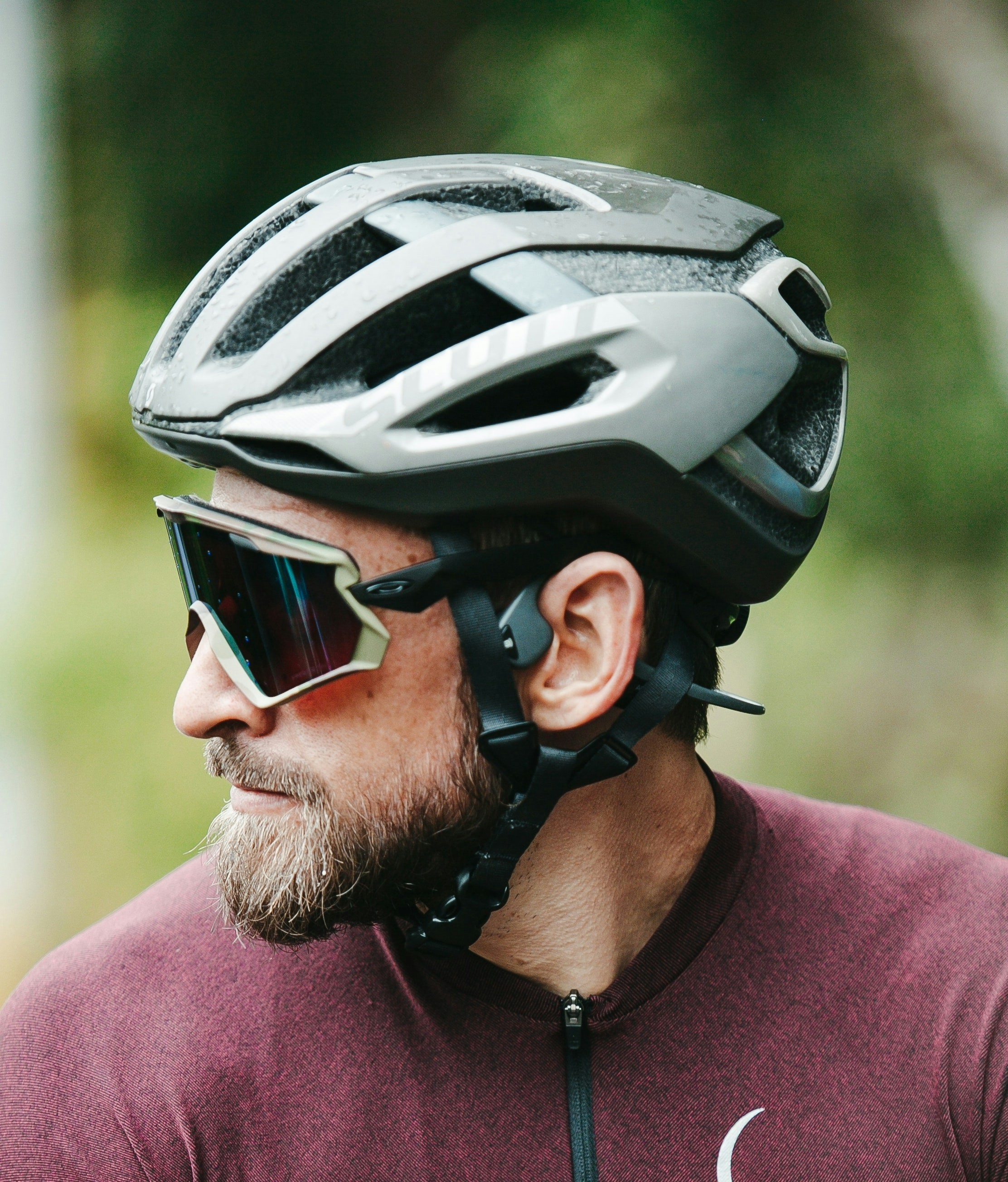
- Sit flat and level
- Cover your forehead
- Feel snug all around
- Stay in place when you move your head
The front edge of the helmet should sit about two finger-widths above your eyebrows.
If the helmet tilts backward and exposes too much forehead, it’s sitting too high.
You should also pay attention to any pressure points. While a new helmet may feel slightly firm, it should not cause discomfort or headaches after a few minutes of wear.
Step 3: Adjust the Retention System
Most modern bike helmets include an adjustment dial or retention system at the back.
Tighten the dial gradually until the helmet feels secure but still comfortable. The helmet should not wobble or shift easily when you shake your head.
Helmets without an adjustment dial typically come with removable pads that allow you to fine-tune the fit. By adding or removing these pads, you can achieve a more secure and comfortable feel that matches your head shape.
Step 4: Check the Chin Straps
Helmet straps play a major role in keeping the helmet secure during rides and falls.
The side straps should form a “V” shape just below your ears. Then tighten the chin strap so it feels snug but not restrictive.
A good rule:
You should be able to fit one or two fingers between the strap and your chin.
If the straps are too loose, the helmet may move during impact.
Step 5: Test the Fit
Before riding, do a quick movement test. Try:
- Looking up and down
- Turning your head side to side
- Gently pushing the helmet forward and backward
The helmet should stay stable without excessive movement.
If it shifts too easily, continue adjusting the fit system or try a different size. Taking a few extra minutes to fine-tune the fit can significantly improve both comfort and safety on the road or trail.
Common Helmet Fit Mistakes
Many riders unknowingly wear helmets incorrectly. Here are a few common mistakes to avoid:
- Wearing the helmet too far back
- Leaving chin straps too loose
- Choosing a helmet that feels overly tight
- Ignoring manufacturer sizing
- Continuing to use an old or damaged helmet
Even the best helmet cannot protect properly if it doesn’t fit correctly.
When Should You Replace a Helmet?
Bike helmets do not last forever. You should replace your helmet if:
- It has been involved in a crash
- The shell is cracked or damaged
- The straps no longer adjust properly
- The interior foam is worn out
- The helmet has reached the end of its recommended service life (often around 3–5 years, depending on the manufacturer and usage)
Sunlight, sweat, and normal wear gradually weaken helmet materials over time. Regular checks can help identify signs of deterioration before they become a safety concern.
Final Thoughts
Choosing the right helmet fit is one of the simplest ways to improve cycling safety and comfort. A properly fitted helmet should feel secure enough to stay in place while remaining comfortable for everyday riding.
Remember that every rider’s head shape is different, so the best helmet is not necessarily the most expensive one—it’s the one that fits correctly. Taking the time to measure, adjust, and test your helmet can make a significant difference in both protection and confidence.
If you’re unsure about sizing or adjustments, visiting Samways and Son for a professional helmet fitting can make the process much easier. A quick professional fitting can help ensure you ride with confidence every time you head out.